 Premium Research Chemicals • Fast, Discreet Shipping • Verified Quality
0
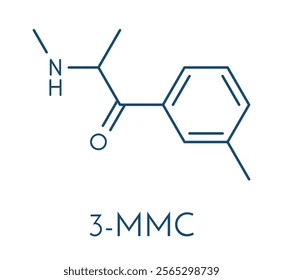
3-MMC Molecular Structure and Chemical Properties
3-MMC, commonly referred to as 3-methylmethcathinone, is a synthetic cathinone that has been studied in chemical and analytical contexts. Understanding its molecular structure and chemical properties is useful when discussing compound identification, analytical characterization, and laboratory research.
This guide provides a general overview of the molecular characteristics of 3-MMC, including its chemical formula, structural features, molecular weight, and analytical considerations.
What Is 3-MMC?
3-MMC is the commonly used abbreviation for 3-methylmethcathinone. It belongs to the synthetic cathinone class, a group of compounds structurally related to cathinone.
From a chemical perspective, 3-MMC contains structural features associated with the cathinone family, including an aromatic ring, a ketone-containing side chain, and an amine group.
The position of the methyl substituent on the aromatic ring distinguishes 3-MMC from some closely related structural analogues.
3-MMC Molecular Formula
The molecular formula generally reported for 3-MMC is:
C₁₁H₁₅NO
This formula describes the elemental composition of the neutral compound.
The compound contains:
- 11 carbon atoms
- 15 hydrogen atoms
- 1 nitrogen atom
- 1 oxygen atom
Molecular formula information is useful for researchers working with mass spectrometry, chemical databases, molecular modeling, and compound identification.
3-MMC Molecular Weight
The molecular weight of 3-MMC is approximately 177.25 g/mol.
Molecular weight is an important reference value in analytical chemistry because it can assist with compound identification and interpretation of analytical data.
For laboratory work, molecular weight should be considered alongside other information such as structural identity, analytical standards, chromatographic behavior, and spectrometric data.
Molecular Structure of 3-MMC
The structure of 3-MMC contains several chemically significant components.
Aromatic Ring
3-MMC contains a benzene ring forming the primary aromatic portion of the molecule.
A methyl substituent is positioned on this aromatic ring. The location of this substituent is represented by the “3-methyl” designation in the compound’s name.
Ketone Group
Like other cathinone compounds, 3-MMC contains a ketone functional group within its side chain.
Functional groups are particularly important in chemistry because they influence molecular properties and contribute to how compounds behave during analytical characterization.
Amine Group
3-MMC also contains an amine functionality. Together with the aromatic ring and ketone-containing side chain, this contributes to the compound’s overall molecular structure.
Chemical Classification
3-MMC is classified as a synthetic cathinone.
Cathinones are chemically related to naturally occurring cathinone found in the khat plant, although synthetic cathinones can have substantially different molecular structures and properties.
Within this broader chemical family, relatively small structural modifications can produce distinct compounds. Consequently, precise compound identification is important when conducting laboratory analysis.
Key Chemical Properties
When evaluating 3-MMC as a research compound, several properties may be relevant to analytical chemistry.
| Property | General Information |
|---|---|
| Common name | 3-MMC |
| Chemical name | 3-methylmethcathinone |
| Chemical class | Synthetic cathinone |
| Molecular formula | C₁₁H₁₅NO |
| Molecular weight | ~177.25 g/mol |
| Functional groups | Ketone, amine, aromatic ring |
| Physical form | May vary depending on material and formulation |
| Analytical characterization | May involve chromatographic and spectrometric techniques |
The exact physical characteristics of a supplied material should be confirmed using the relevant product documentation and analytical data.
How Is 3-MMC Identified in Laboratory Analysis?
Chemical identification generally relies on analytical techniques rather than appearance alone.
Depending on the research objective, laboratories may use techniques such as:
Mass Spectrometry
Mass spectrometry can provide information about molecular mass and fragmentation patterns, supporting compound identification.
Chromatography
Chromatographic methods such as GC or HPLC/LC-based techniques can help separate components within a sample and support qualitative or quantitative analysis.
Nuclear Magnetic Resonance
NMR spectroscopy can provide structural information by examining the chemical environment of atoms within a molecule.
Using complementary analytical techniques can provide a stronger basis for compound characterization than relying on a single observation.
Why Molecular Structure Matters
Understanding molecular structure helps researchers interpret analytical results and distinguish structurally related compounds.
Small changes in molecular structure can affect properties such as:
- Molecular mass
- Polarity
- Chromatographic retention
- Spectrometric behavior
- Solubility characteristics
- Chemical reactivity
- Stability
For this reason, accurate chemical identification is particularly important when working with compounds that have closely related analogues.
3-MMC and Analytical Research
From an analytical perspective, compounds such as 3-MMC can be relevant to method-development and identification research.
Laboratories may be interested in establishing analytical methods capable of distinguishing a target compound from structurally similar substances. This can involve developing appropriate chromatographic separation, evaluating reference materials, and interpreting mass-spectral or spectroscopic information.
The specific analytical approach depends on the laboratory’s objectives, equipment, validation requirements, and applicable regulations.
Importance of Purity and Documentation
Researchers evaluating a chemical material should consider more than its stated name.
Relevant information can include:
- Compound identity
- Molecular formula
- Molecular weight
- Batch or lot number
- Purity information
- Analytical testing
- Certificate of Analysis (COA)
- Storage requirements
- Applicable safety documentation
A Certificate of Analysis can provide batch-specific analytical information and help laboratories maintain appropriate documentation and traceability.
Regulatory Considerations
The legal status and controls applicable to 3-MMC can vary by jurisdiction and may change over time.
European laboratories should verify current national and EU requirements before acquiring, possessing, transporting, storing, or analyzing controlled or regulated substances.
Institutional policies and laboratory safety requirements should also be followed.
Frequently Asked Questions
What is the molecular formula of 3-MMC?
The commonly reported molecular formula for 3-MMC is C₁₁H₁₅NO.
What is the molecular weight of 3-MMC?
The molecular weight is approximately 177.25 g/mol for the neutral compound.
What type of chemical is 3-MMC?
3-MMC is classified as a synthetic cathinone.
Which functional groups are present in 3-MMC?
Its molecular structure contains an aromatic ring, a ketone-containing side chain, and an amine functionality.
How can 3-MMC be analytically identified?
Laboratories may use complementary techniques including chromatography, mass spectrometry, and NMR spectroscopy, depending on the analytical objective.
Why is molecular structure important?
Molecular structure provides information that can help researchers understand and distinguish compounds during analytical characterization.